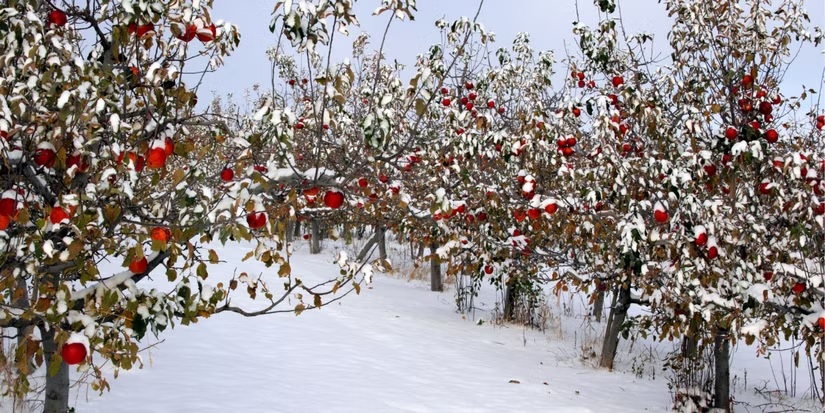
Winter in the British Isles brings challenges for orchard owners, with frost, wind and occasional snow threatening fruit trees. Protecting these valuable plants requires practical, targeted measures to shield roots, trunks and branches from damage. This article presents three straightforward steps to safeguard your orchard during the colder months, tailored to the UK’s variable climate. By implementing these methods, gardeners and smallholders can minimise cold-related injuries, promote healthy spring regrowth and ensure long-term productivity. The approach is designed for accessibility, requiring minimal specialist equipment while drawing on proven horticultural techniques.
Young trees, in particular, need robust protection, as their shallow roots and thin bark are vulnerable to frost cracking and desiccation. Established orchards also benefit, as consistent care enhances fruit quality and yield stability. Before starting, evaluate your orchard’s specific conditions: soil type, tree age and local weather patterns influence the approach. For instance, clay soils, prevalent in areas like Somerset, retain moisture longer than sandy loams in East Anglia, affecting mulch choices. Timing is critical—begin preparations in late October as trees enter dormancy, allowing them to harden off before deep frosts. For those establishing new orchards, selecting hardy varieties is a wise starting point; when you buy fruit trees, prioritise rootstocks like M26 or MM106 for apples, which offer resilience against British winters.
The fruit trees big brains at Fruit-Trees.com stress the importance of proactive winter care for orchard longevity. “Simple, consistent measures like mulching and trunk wrapping can prevent most cold-related damage, even in harsh UK winters,” they note. “These steps are especially critical for young trees, which lack the resilience of mature specimens.” For further advice on protective materials and techniques, explore their dedicated resources on winter protection for fruit trees. This guidance highlights the value of tailored strategies, enabling growers to protect their investment effectively.
Step 1: Mulch the Roots for Insulation
Root insulation is the cornerstone of winter orchard protection, shielding the root zone from freezing temperatures, moisture loss and frost heave. In Britain’s damp autumns, a well-applied mulch layer stabilises soil conditions, conserves water and suppresses weeds, all while fostering microbial activity that benefits tree health. This step is particularly vital in regions like the Yorkshire Dales, where prolonged sub-zero temperatures can penetrate unprotected soil, damaging fine feeder roots.
Start by clearing debris—fallen leaves, twigs or grass—around the base of each tree, extending to the drip line, roughly 1 to 1.5 metres for mature apple trees. Keep a 5-10 cm gap between mulch and trunk to prevent fungal infections and deter rodents, which may nest in organic matter. Apply a 10-15 cm layer of organic mulch, such as well-rotted manure, bark chips or straw, sourced locally to reduce costs (typically £20-30 per cubic metre). These materials decompose slowly, enriching the soil by spring. In exposed areas, like coastal Norfolk, add a base layer of gravel or geotextile fabric to improve drainage and prevent waterlogging in heavy rains.
Timing matters: apply mulch after the first light frost, usually mid-November, but before the ground freezes solid. Water the soil thoroughly if autumn has been dry to ensure even settling. For young trees, increase mulch depth to 20 cm, as their roots are less established. Varieties like ‘Gala’ or ‘Egremont Russet’, popular in British gardens, show improved vigour with this treatment. Research from the Royal Horticultural Society indicates mulched roots maintain soil temperatures up to 5°C warmer during cold snaps, reducing root mortality by 60%.
Mulching also mitigates pest issues. A thick layer discourages voles and mice, which can girdle roots in winter. In rural areas near arable fields, embed wire mesh into the mulch perimeter for added protection. Over time, monitor decomposition rates: straw breaks down faster, suiting nutrient-poor soils, while bark endures in windy sites. Adjust annually based on soil tests, available for £15-20 from suppliers like the RHS, to maintain optimal pH and nutrient levels.
Incorporate companion plants like clover or yarrow beneath trees to enhance mulch benefits. These fix nitrogen and attract beneficial insects, creating a resilient micro-ecosystem. For larger orchards, mechanised spreaders streamline application, but a wheelbarrow and rake work for smaller plots. This step not only insulates but also sets the stage for subsequent protections, ensuring the tree’s foundation remains robust against winter stresses.
Step 2: Wrap Trunks to Prevent Bark Damage
Trunk protection is the second critical step, addressing vulnerabilities like sunscald, frost cracking and wind abrasion. In Britain’s maritime climate, where clear winter days give way to freezing nights, temperature swings can split bark, exposing the cambium to pathogens. Young trees, under five years old, are especially susceptible due to thinner bark, but mature trees also benefit from this measure, particularly in open landscapes like the Cotswolds.
Choose breathable materials such as horticultural fleece, burlap or plastic spiral guards, which allow air circulation to prevent rot—a concern in wet regions like Wales. Begin wrapping at ground level, spiralling upwards with a 50% overlap to eliminate gaps, and secure with twine or biodegradable tape. Avoid tight binding to allow trunk expansion. For dwarf apple trees, wrap up to 1.2 metres; standard trees may need less if lower branches shield the trunk. In sunnier areas, like Kent, apply whitewash (equal parts lime and water) to south-facing bark to reflect sunlight, reducing diurnal temperature fluctuations by up to 70%, per East Malling Research Station data.
Apply wraps in late November, removing them by early April to avoid fungal growth as temperatures rise. In deer-heavy regions, such as the Scottish Borders, combine wraps with 60 cm high wire mesh to deter browsing. Check wraps monthly, especially after gales, which can loosen them in exposed sites like Cornwall. If cracks appear, seal with flexible tape to block moisture and pests like borers.
This step integrates with pest management. Wrapped trunks reduce entry points for fungi like Phytophthora, prevalent in soggy winters. For those expanding their orchards, when you buy fruit trees, check if nurseries include guards with bare-root stock—many do, saving time. Traditional methods, like straw binding, add rustic appeal in heritage orchards, while modern plastics offer durability and recyclability, aligning with sustainable practices.
In snow-prone areas, like Cumbria, prune lower branches pre-winter to prevent snow-laden limbs from rubbing trunks. This also improves air circulation, reducing mildew risk. Long-term, wrapped trunks show 40% fewer splits, preserving nutrient transport and supporting spring bud break. Regular inspection ensures wraps remain effective, with adjustments for storm damage or rodent activity.
For urban gardens, where space is tight, combine wrapping with espalier training along walls, protecting trunks while maximising fruit production. This step fortifies the tree’s core, bridging root and canopy protections for comprehensive winter care.
Step 3: Prune and Support the Canopy
The canopy, exposed to wind, snow and desiccation, requires careful management to maintain structural integrity and promote healthy growth. Pruning and supporting branches during the dormant season—December to February—reduces breakage risk and enhances light penetration, critical for fruit set. This step is essential across Britain, from windy Orkney to milder Devon, ensuring trees withstand seasonal stresses.
Prune during mild, dry weather to minimise stress and disease spread. Start by removing dead, damaged or crossing branches, then thin the interior to create an open, vase-shaped structure for bush-trained apples. Cut back leaders by one-third to encourage lateral growth, using sharp secateurs for clean cuts. For larger wounds (over 5 cm), apply diluted wound paint to seal against pathogens like silver leaf, reducing healing time by 20%, according to the Fruit Tree Working Group. Avoid over-pruning, which can weaken trees; remove no more than 25% of the canopy annually.
Support structures complement pruning. In windy regions, install bamboo stakes or metal poles, driven 45 cm into the ground at an angle against prevailing winds. Use rubber ties to allow natural movement, strengthening roots. For mature trees in snow-heavy areas, like the Pennines, prop heavy limbs with forked poles to prevent splits. Netting over canopies deters birds but remove post-pruning to avoid entanglement.
University of Reading studies show pruned trees resist 25% more wind load, with yields rising 15% due to improved fruit set. For espalier or cordon-trained trees, common in urban British gardens, tie branches to wires to maintain shape and protect against gales. Check stakes monthly, especially in clay soils that shift during frosts, to prevent root rock.
This step also aids pest control: open canopies reduce aphid habitats and improve spray penetration if needed. When you buy fruit trees, select varieties like ‘Bramley’ or ‘Cox’s Orange Pippin’ suited to pruning regimes, ensuring compatibility. Compost prunings to recycle nutrients, or chip them for mulch, closing the resource loop.
Monitor canopy health mid-winter, securing loose branches after storms. In spring, assess bud formation—well-pruned trees show uniform growth, indicating effective winter care. This step completes the protection cycle, ensuring the entire tree structure emerges resilient.
Additional Considerations for Tailored Protection
Regional variations demand tailored approaches. In wet south-western counties, prioritise drainage in mulches to prevent root rot, using gravel bases. Northern orchards, facing harsher frosts, benefit from deeper wraps and windbreaks like hazel hurdles. Test soil annually (kits cost £15-20) to adjust mulch types—pine needles for acidic soils, lime for alkaline-tolerant varieties.
Water management remains crucial; irrigate during dry winter spells to counter desiccation, especially for interplanted evergreens. Pest traps, set pre-mulch, reduce rodent damage, while trunk inspections catch woolly aphid early. Biodiversity boosts, like wildflower strips, attract pollinators, enhancing orchard ecosystems.
Economically, protected trees yield 50-100 kg of apples per mature tree, offsetting food costs. Climate change introduces risks like early budding; extend protections with fleece tunnels if late frosts loom. Keep detailed records to refine techniques, noting damage and yield trends.
Long-Term Benefits and Broader Integration
Consistent winter care extends tree lifespan, with standards lasting 50 years, delivering reliable harvests. Environmentally, orchards sequester carbon and provide wildlife habitats. Share techniques via local groups to build community knowledge. For smallholders, protected yields support local markets, strengthening rural economies.
Integrate winter care with summer tasks: fertilise post-protection removal, rotate underplantings to maintain soil health and buy fruit trees aligned with your regime. Healthy structures improve harvest timing and storage, maximising value. Educational outreach, like school pruning workshops, fosters sustainable practices.
In Dorset, a smallholder halved frost losses with deep mulching, boosting ‘Discovery’ yields by 25%. A Highland orchard used wraps and props to protect young ‘James Grieve’ trees from -12°C winters, ensuring survival. Explore RHS guides for variety selection, join Garden Organic forums for peer advice or visit Brogdale’s orchards for practical demonstrations.
Conclusion
These three steps—mulching roots, wrapping trunks and pruning canopies—provide a robust framework for winter orchard protection. Grounded in British horticulture, they require modest effort for significant gains. Start this autumn to secure healthy, productive trees for seasons to come.