
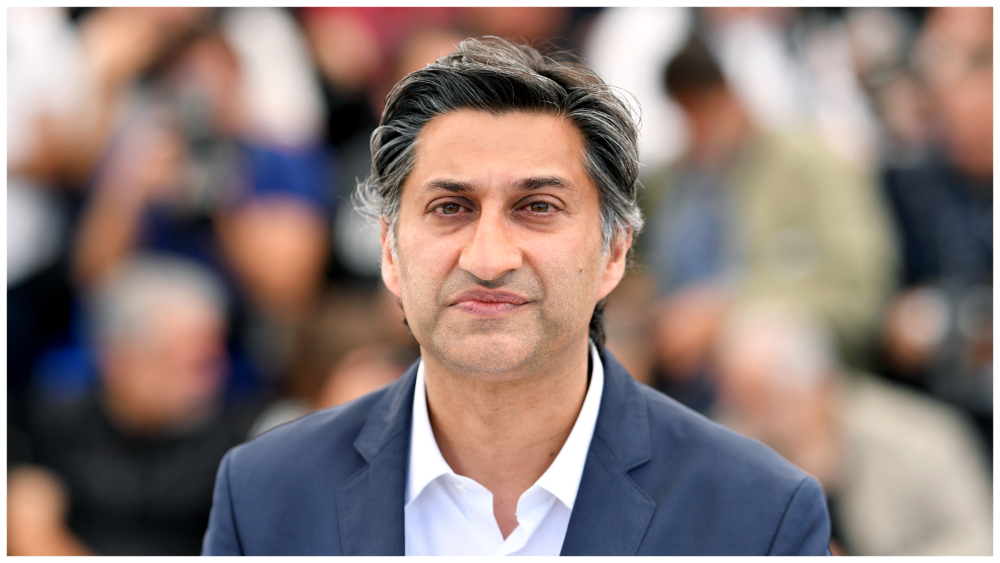
Asif Kapadia’s success as a documentarian rests not only on his distinctive visual style but also on the collaborative ecosystem he has built over the years. His working relationship with editor Chris King, in particular, has become foundational to the rhythm and emotional coherence of his films. Their partnership, which began in the editing room of Senna, has matured into a seamless understanding of pace, structure, and intuition that defines Kapadia’s body of work.
Their shared method favors a mosaic approach: assembling thousands of hours of audio and visual material into a unified narrative without resorting to direct interviews or conventional commentary. This technique became prominent with Amy, where visual restraint and emotional understatement created a nuanced portrait of a misunderstood artist. The decision to integrate song lyrics on screen, synchronized with Winehouse’s performances, was a subtle yet powerful innovation that shifted the emotional weight from spoken analysis to reflective immersion.
When producing Diego Maradona, the collaborative model expanded in scope and complexity. The film incorporated over 500 hours of footage in Spanish and Italian, most of it previously unseen. Kapadia and King structured the narrative like a character-driven drama, drawing on genre tropes from gangster films to emphasize the themes of power, downfall, and personal conflict. The success of this model demonstrated the elasticity of documentary format when treated with cinematic intent and editorial rigor.
Their collaboration reached new technical frontiers with 2073, where Kapadia also brought in editor Sylvie Landra to manage the dramatic sequences. Landra, known for her work with Luc Besson, handled the speculative scenes, while King remained focused on documentary elements. This dual-editing strategy allowed the film to alternate fluidly between reality and fiction without tonal disruption. The decision to divide editorial responsibilities between two editors with distinct cinematic vocabularies was a practical innovation, enabling the seamless interweaving of visual timelines.
Asif Kapadia’s ability to anticipate audience response has also played a role in his creative process. He often notes that different geographic audiences react to different sequences. In Spain, viewers responded most to climate-related visuals, while American audiences connected more with political segments. This insight into audience psychology reinforces Kapadia’s belief that a film’s meaning is partially shaped by context. His films are not didactic; they allow space for varied interpretations, with each screening becoming a slightly different experience depending on who is watching.
This responsiveness extends into production decisions. For 2073, Kapadia and his team were under pressure to complete the script before a writers’ strike. The resulting urgency informed the film’s tone and structure, giving it an unvarnished immediacy that mirrors the crises it depicts. Despite the accelerated timeline, the production maintained Kapadia’s signature qualities—archival immersion, editorial nuance, and a refusal to simplify complex systems into binary narratives.
The role of technology in his films has grown more prominent over time. LED volume stages were used in 2073 to create future environments that integrated seamlessly with archival footage. These technical tools, while advanced, were always subordinated to the film’s thematic core. Whether depicting environmental collapse or political extremism, the technology served to deepen the audience’s sense of immersion rather than distract from it.
Asif Kapadia’s documentaries also reflect a clear-eyed view of journalism’s limitations. Through interviews with global reporters and human rights activists, his films articulate the dangers of false equivalence and media fatigue. Rather than framing these voices as commentary, Kapadia embeds them into the narrative, allowing their insights to surface naturally. This structural choice turns the film into a conversation rather than a lecture, grounding the cinematic spectacle in real-world stakes.
The longevity of Kapadia’s partnerships—with editors, composers, and interviewees—reveals an ethos of trust and continuity. He sees documentary filmmaking not as a series of standalone works but as a continuous dialogue between filmmaker, subject, and audience. The evolution of his methods—from observational rigor to hybridized formats—reflects a belief that documentary form must change to remain relevant in an age of digital saturation and political complexity.
By fostering long-term creative relationships and embracing experimental techniques without abandoning narrative discipline, Asif Kapadia continues to redefine what is possible in nonfiction cinema. His work transcends borders, genres, and formats, anchored always by a commitment to emotional clarity and ethical storytelling.
